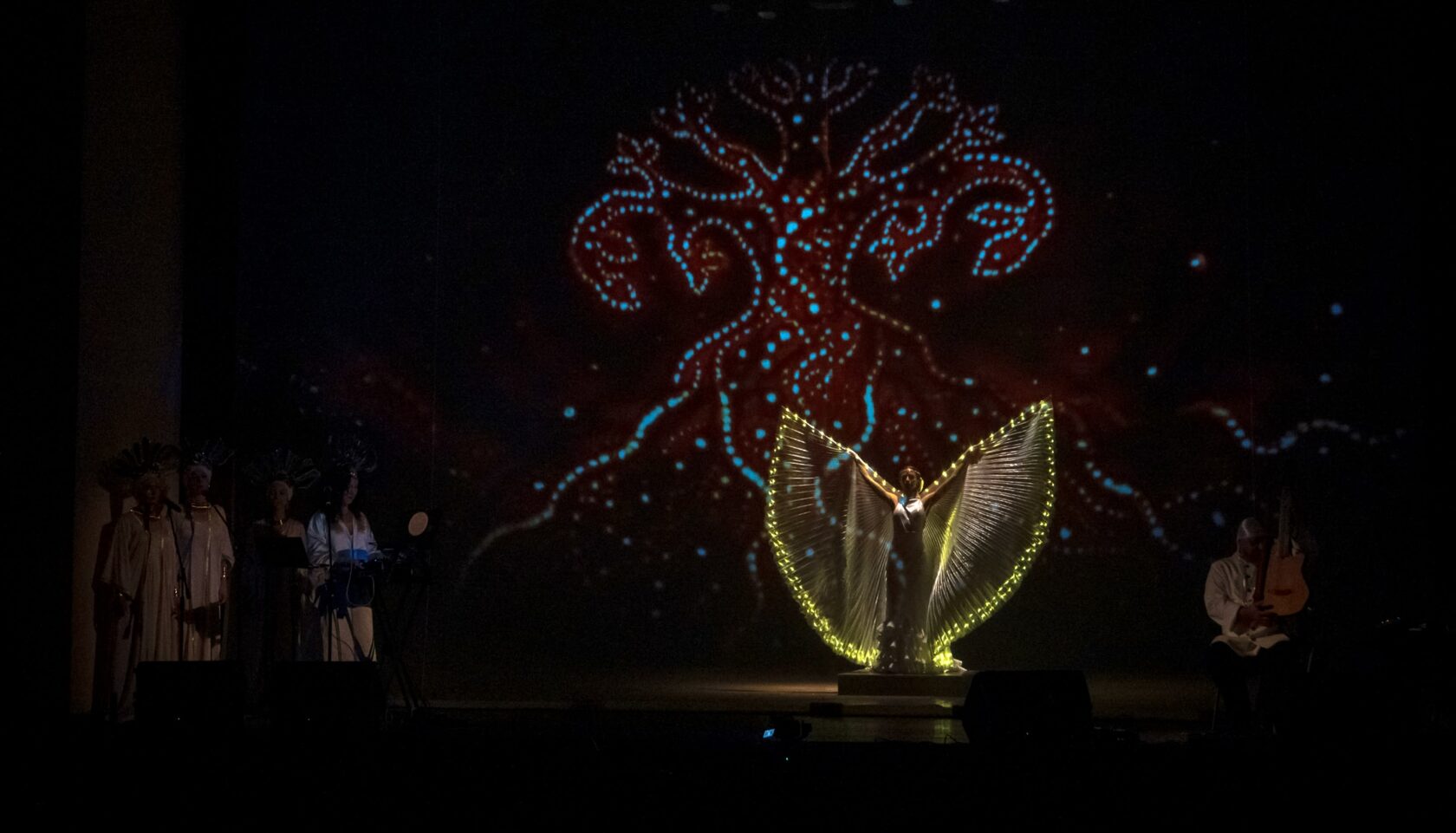
The Tree of Life: The Universal Code of the Universe.
The image of the Tree of Life (or World Tree) is perhaps the most universal archetype in the history of human thought. It arises independently in cultures separated by oceans and millennia, which speaks to its deep roots in the structure of the collective unconscious, and therefore in our Universe of Forgotten Worlds, which is its poetic form.
It is not just a symbol, but a matrix, a model of the world, describing the structure of the cosmos, the path of the soul, and the laws of existence.
We will consider how this archetype has manifested itself in various traditions and in our rock mystery "Isidis":
1. The Tree as the Axis Mundi
In its primary, mythological function, the Tree connects three levels of the universe: the crown—the heavens (the world of the gods), the trunk—the earth (the world of humans), and the roots—the underworld (the world of ancestors and chthonic forces). It is the center of the world, a point of support and order amidst chaos.
· Norse Yggdrasil: The most striking example. The ash tree Yggdrasil connects nine worlds. At its roots flow the springs of fate and wisdom. It is not just a tree, but a dynamic structure of the universe, where the eagle at the top wages eternal battle with the dragon Nidhogg, who gnaws at the roots, and the squirrel Ratatosk, running along the trunk, mediates between them.
· Slavic World Tree: In Slavic tradition, it is often called "oak" or "sycamore." In folklore (songs, riddles, and incantations), it is described as standing "on the umbilical cord of the sea," on the island of Buyan, on the Alatyr stone.
· In ancient Armenian pagan tradition, the Tree of Life served as the axis mundi, also connecting the three levels of the universe. With the adoption of Christianity, the image of the Tree of Life organically merged with a unique phenomenon of Armenian culture—khachkars ("cross-stones"). The cross on the khachkar is understood as the Tree of Life, connecting heaven and earth.
2. The Tree as the Source of Life and Immortality
In this role, the Tree acts as the giver of fertility, eternal life, and divine grace.
· Egyptian Sycamore and Iusatus: The Egyptians revered a tree (often a sycamore or acacia) in which life and death are united. The sacred Iusatus tree was considered the progenitor of the first pair of gods—Isis and Osiris, the heroes of our rock mystery.
In the Pyramid Texts, the deceased pharaoh ascends to heaven through the branches of a tree. The sycamore "stands on the threshold of life and death, linking the two worlds." Its fruit and water grant eternal existence in the fields of Yalu.
Chinese Tree of Immortality with Peaches: In the Chinese Taoist tradition, a peach ripens on the tree of life once every three thousand years. Whoever eats it attains immortality. This tree is often guarded by a dragon (a symbol of immortality) and a phoenix.
Persian Tree of All Seeds: In Iranian (pre-Islamic) mythology, the world tree grows in the middle of the sacred lake Vorukasha. It contains the seeds of all the plants in the world. The god Ahura Mazda created two fish to guard it from the spawn of Ahriman (the frog), lest evil destroy the source of life.
3. Esoteric Metaphysics: Kabbalistic Tree of Life, Tree of Sephiroth.
Sephiroth and Paths: The Kabbalistic Tree consists of 10 divine emanations (sephiroth) and 22 paths (corresponding to the Hebrew letters) connecting them. It is the dynamic structure through which the infinite Creator (Ein Sof) unfolds and manifests itself in the finite world.
Three Pillars: The Tree is organized into three vertical columns: the right pillar of Mercy, the left pillar of Severity (Judgment), and the central pillar of Equilibrium (Consciousness). This indicates the need for a balance of opposites in spiritual work.
Path of Ascent: The Tree is a map of the inner journey. The "Path of the Serpent" (the gradual ascent through the sefirot) symbolizes the gradual development of the soul, and the "Path of the Arrow" (along the central pillar) represents a direct mystical breakthrough to the divine.
Each sefirah represents a stage of consciousness that must be experienced and integrated.
In the rock mystery "Isidis," during the burial scene of Osiris, in order to reach the other side of existence, he must ascend through all the sephiroth. Then, through hidden knowledge—the secret sephira Daath, located between the sephiroth of the Heart (human love) and unconditional truth (divine love)—he enters the underworld, where the Tree of Death, inverted and opposite to the Tree of Life, reigns.
In Alexander Kuindzhi's symphony "The Tree of Judas," which is the musical and conceptual leitmotif that unifies the plot of our rock mystery at its deepest core, the Tree is a "silent witness to all events from the beginning of time" (as stated in the scene before the song "Mother Earth Sings"), which knows better than anyone how transitory and predictable are any human actions that distance them from the silence of the universe.
And it is the Tree of Life that is the invisible, inhuman, yet central character of our rock mystery.
It is toward it that our heroes' journey is directed: Isis and Osiris seek the secret of eternal life from it, Semiramis heals Ara the Beautiful with the power of his spiritual immortality, Death is born from the Tree itself, but retreats before the unwavering will of the Eternal Traveler in the Desert.
It gives birth to souls in the Magical Forest, and the Bird upon it—the personification of Life itself—blesses the lover's difficult journey. It gives hope and rewards with challenges. It is silent, but in this silence lie all the answers of the world.
Summarizing all traditions and meanings, we can identify the key meanings of the Tree of Life:
1. Connection of worlds: The principle of the unity of all things. The upper and the lower, the spiritual and the material—all are part of a single whole and are inextricably linked.
2. Center and Axis: Symbol of the sacred center of the universe and our individual soul, its fulcrum and inner stability.
3. Unity of Opposites: The Tree reconciles above and below, life and death, male and female, mercy and severity (as in the pillars of Kabbalah or in the struggle between the eagle and the serpent on Yggdrasil).
4. Cyclicity and Rebirth: The evergreen Yggdrasil, the peaches of immortality, and the Egyptian sycamore speak of life's victory over death through renewal.
5. Source of Wisdom and Destiny: At the roots of the Tree flow the springs of wisdom and destiny, and the laws of existence are inscribed on its branches. It is the repository of hidden knowledge. Is this not the secret meaning of the story of Adam and Eve, who tasted the fruit of knowledge and therefore entered the endless cycle of the material world to experience separation from the spiritual world and return consciously to paradise?
6. The Path of Initiation: The Tree is Jacob's ladder, the ladder by which the soul ascends to perfection, passing through stages of transformation.
The Tree of Life is not just a symbol, but a universal code describing the very structure of reality. It teaches us that the world is united in its complexity, that deep roots (ancestral traditions) are necessary for growth, and a crown reaching skyward (spiritual ideals, unique to each person) is necessary for development. It reminds us that the path to self-knowledge and God lies through the unification of all three worlds—physical, mental, and spiritual—into a single pillar of our own being.
How do you see the Tree of Life symbol?
The image of the Tree of Life (or World Tree) is perhaps the most universal archetype in the history of human thought. It arises independently in cultures separated by oceans and millennia, which speaks to its deep roots in the structure of the collective unconscious, and therefore in our Universe of Forgotten Worlds, which is its poetic form.
It is not just a symbol, but a matrix, a model of the world, describing the structure of the cosmos, the path of the soul, and the laws of existence.
We will consider how this archetype has manifested itself in various traditions and in our rock mystery "Isidis":
1. The Tree as the Axis Mundi
In its primary, mythological function, the Tree connects three levels of the universe: the crown—the heavens (the world of the gods), the trunk—the earth (the world of humans), and the roots—the underworld (the world of ancestors and chthonic forces). It is the center of the world, a point of support and order amidst chaos.
· Norse Yggdrasil: The most striking example. The ash tree Yggdrasil connects nine worlds. At its roots flow the springs of fate and wisdom. It is not just a tree, but a dynamic structure of the universe, where the eagle at the top wages eternal battle with the dragon Nidhogg, who gnaws at the roots, and the squirrel Ratatosk, running along the trunk, mediates between them.
· Slavic World Tree: In Slavic tradition, it is often called "oak" or "sycamore." In folklore (songs, riddles, and incantations), it is described as standing "on the umbilical cord of the sea," on the island of Buyan, on the Alatyr stone.
· In ancient Armenian pagan tradition, the Tree of Life served as the axis mundi, also connecting the three levels of the universe. With the adoption of Christianity, the image of the Tree of Life organically merged with a unique phenomenon of Armenian culture—khachkars ("cross-stones"). The cross on the khachkar is understood as the Tree of Life, connecting heaven and earth.
2. The Tree as the Source of Life and Immortality
In this role, the Tree acts as the giver of fertility, eternal life, and divine grace.
· Egyptian Sycamore and Iusatus: The Egyptians revered a tree (often a sycamore or acacia) in which life and death are united. The sacred Iusatus tree was considered the progenitor of the first pair of gods—Isis and Osiris, the heroes of our rock mystery.
In the Pyramid Texts, the deceased pharaoh ascends to heaven through the branches of a tree. The sycamore "stands on the threshold of life and death, linking the two worlds." Its fruit and water grant eternal existence in the fields of Yalu.
Chinese Tree of Immortality with Peaches: In the Chinese Taoist tradition, a peach ripens on the tree of life once every three thousand years. Whoever eats it attains immortality. This tree is often guarded by a dragon (a symbol of immortality) and a phoenix.
Persian Tree of All Seeds: In Iranian (pre-Islamic) mythology, the world tree grows in the middle of the sacred lake Vorukasha. It contains the seeds of all the plants in the world. The god Ahura Mazda created two fish to guard it from the spawn of Ahriman (the frog), lest evil destroy the source of life.
3. Esoteric Metaphysics: Kabbalistic Tree of Life, Tree of Sephiroth.
Sephiroth and Paths: The Kabbalistic Tree consists of 10 divine emanations (sephiroth) and 22 paths (corresponding to the Hebrew letters) connecting them. It is the dynamic structure through which the infinite Creator (Ein Sof) unfolds and manifests itself in the finite world.
Three Pillars: The Tree is organized into three vertical columns: the right pillar of Mercy, the left pillar of Severity (Judgment), and the central pillar of Equilibrium (Consciousness). This indicates the need for a balance of opposites in spiritual work.
Path of Ascent: The Tree is a map of the inner journey. The "Path of the Serpent" (the gradual ascent through the sefirot) symbolizes the gradual development of the soul, and the "Path of the Arrow" (along the central pillar) represents a direct mystical breakthrough to the divine.
Each sefirah represents a stage of consciousness that must be experienced and integrated.
In the rock mystery "Isidis," during the burial scene of Osiris, in order to reach the other side of existence, he must ascend through all the sephiroth. Then, through hidden knowledge—the secret sephira Daath, located between the sephiroth of the Heart (human love) and unconditional truth (divine love)—he enters the underworld, where the Tree of Death, inverted and opposite to the Tree of Life, reigns.
In Alexander Kuindzhi's symphony "The Tree of Judas," which is the musical and conceptual leitmotif that unifies the plot of our rock mystery at its deepest core, the Tree is a "silent witness to all events from the beginning of time" (as stated in the scene before the song "Mother Earth Sings"), which knows better than anyone how transitory and predictable are any human actions that distance them from the silence of the universe.
And it is the Tree of Life that is the invisible, inhuman, yet central character of our rock mystery.
It is toward it that our heroes' journey is directed: Isis and Osiris seek the secret of eternal life from it, Semiramis heals Ara the Beautiful with the power of his spiritual immortality, Death is born from the Tree itself, but retreats before the unwavering will of the Eternal Traveler in the Desert.
It gives birth to souls in the Magical Forest, and the Bird upon it—the personification of Life itself—blesses the lover's difficult journey. It gives hope and rewards with challenges. It is silent, but in this silence lie all the answers of the world.
Summarizing all traditions and meanings, we can identify the key meanings of the Tree of Life:
1. Connection of worlds: The principle of the unity of all things. The upper and the lower, the spiritual and the material—all are part of a single whole and are inextricably linked.
2. Center and Axis: Symbol of the sacred center of the universe and our individual soul, its fulcrum and inner stability.
3. Unity of Opposites: The Tree reconciles above and below, life and death, male and female, mercy and severity (as in the pillars of Kabbalah or in the struggle between the eagle and the serpent on Yggdrasil).
4. Cyclicity and Rebirth: The evergreen Yggdrasil, the peaches of immortality, and the Egyptian sycamore speak of life's victory over death through renewal.
5. Source of Wisdom and Destiny: At the roots of the Tree flow the springs of wisdom and destiny, and the laws of existence are inscribed on its branches. It is the repository of hidden knowledge. Is this not the secret meaning of the story of Adam and Eve, who tasted the fruit of knowledge and therefore entered the endless cycle of the material world to experience separation from the spiritual world and return consciously to paradise?
6. The Path of Initiation: The Tree is Jacob's ladder, the ladder by which the soul ascends to perfection, passing through stages of transformation.
The Tree of Life is not just a symbol, but a universal code describing the very structure of reality. It teaches us that the world is united in its complexity, that deep roots (ancestral traditions) are necessary for growth, and a crown reaching skyward (spiritual ideals, unique to each person) is necessary for development. It reminds us that the path to self-knowledge and God lies through the unification of all three worlds—physical, mental, and spiritual—into a single pillar of our own being.
How do you see the Tree of Life symbol?
